How to program the Pebble smartwatch: Part 2

Update Pebble has released version 2 of its OS and this invalidates much of what follows, which was written for an earlier version of the OS.

In Part 1 we got our basic Pebble app up and running, but it doesn’t do very much. Let’s add some user interaction.
Continue reading

How to program the Pebble smartwatch: Part 1

Update Pebble has released version 2 of its OS and this invalidates much of what follows, which was written for an earlier version of the OS.

Pebble didn’t invent the smartwatch, but it has done more than most to bring this new product category to the attention of the world, largely thanks to its hugely successful and well-reported Kickstarter funding campaign.

Continue reading

Back-up a Raspberry Pi SD card using a Mac

I’ve re-installed my Pi’s SD card storage more times than I care to recall. New cards, programming glitches, messing with Linux’s settings files – all of these reasons have forced me to go through the process of re-flashing the Pi’s storage card. That’s bad enough – what’s worse is having to re-download the applications I’d added since the previous install, applying updates and choosing again all of my system preferences.

Continue reading

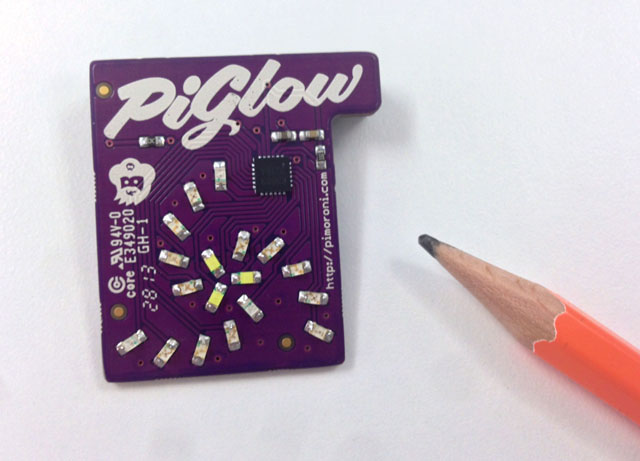
Review: the Pimoroni PiGlow

Pimoroni is without doubt one of the most colourful companies to have come to market in support of the growing community of Raspberry Pi fans. The firm shot to fame last year when it released Pibow, one of the first cases for the Pi.

Pimoroni Piglow
Let there be light: Pimoroni’s Piglow
Continue reading

Review: the Ciseco Pi-Lite

Not so long ago, a hardware hacker called Jimmie Rodgers decided to solder 126 LEDs onto a small board that could be plugged into the Arduino microcontroller kit. He dubbed it the LoL Shield: ‘LoL’ for ‘lots of LEDs’, and ‘shield’ because that’s that’s what Arduino add-ons are called.

Ciseco Pi-Lite
Ciseco’s Pi-Lite hooked up to my Raspberry Pi
Continue reading

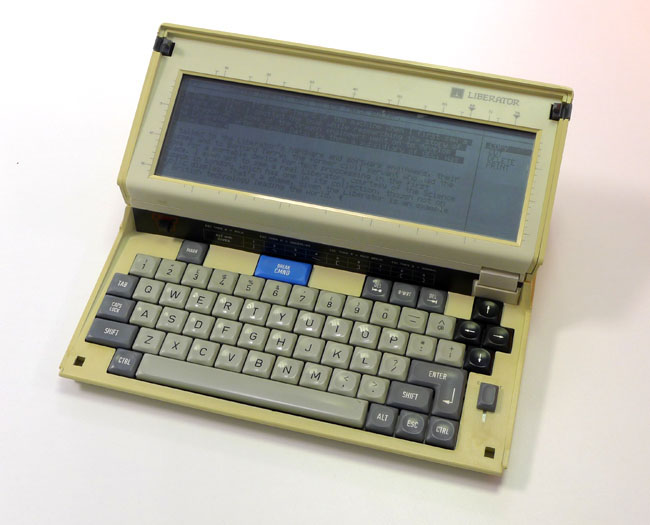
Retro Review: Thorn EMI Liberator (1985)

In November 2012, I wrote and published the definitive history of the Thorn EMI Liberator, the first British laptop computer, over at The Register. I’d never even heard of the machine when I first saw a picture of it. I spotted the snap while researching the story of the Dragon 32 – some of the Dragon engineers went on to develop the Liberator after Dragon Data, by then a subsidiary of electrical industry giant GEC, was closed down.

Thorn EMI Liberator
The Liberator in action
Continue reading

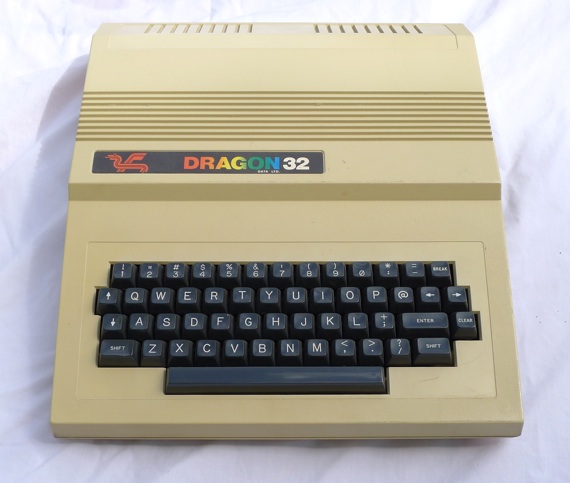
RIP: Dragon 32 (1982-2013) my first 8-bit colour microcomputer

My Dragon 32 – bought from Boots, Central Milton Keynes by my father for my Christmas 1982 present – passed away this weekend during routine maintenance. It was 31.

Dragon 32, at peace now
Continue reading

Review: Pibow and SB Components Raspberry Pi Cases

I bought a case for my Pi very early on. It seemed sensible: I don’t keep the Pi permanently plugged in, so it’ll always get plenty of handling – not something you want to subject on a naked board to. I got a cheap one – the SB Components case, covered below – but have since begun to wonder whether I needed something better: a case that’s most suited to regular opening and closing while I slip on and off various GPIO add-ons.

Continue reading

Review: Raspberry Pi beginners’ books

Over at The Register, you can read my round up of five of the latest Raspberry Pi books:

  • The Raspberry Pi User Guide by Eben Upton and Gareth Halfacree
  • Getting Started with the Raspberry Pi by Matt Richardson and Shawn Wallace
  • Raspberry Pi in Easy Steps by Mike McGrath
  • Raspberry Pi for Dummies by Sean McManus and Mike Cook
  • Haynes’ Raspberry Pi Owners’ Workshop Manual by Gray Girling
Wiley’s Pi User Guide: version 2.0 and version 1.0
Continue reading

Connect a Raspberry Pi to a Mac using a USB-Serial adapter

I’m enjoying tinkering with the Raspberry Pi. Alas most of the tutorials and guides available online, of which there are many, focus on hooking the tiny board computer to Windows or Linux machines. Mac-centric guidance is sparse, and I could have used some this week.

A Pi's UART pins, connected
A Pi’s UART pins, connected
Continue reading