Phantom Slayer, the 1982 computer game I’ve restored on the Raspberry Pi Pico, has been updated to version 1.0.1 to give the titular spectres some extra smarts as they navigate the game maze in pursuit of the player.


Phantom Slayer, the 1982 computer game I’ve restored on the Raspberry Pi Pico, has been updated to version 1.0.1 to give the titular spectres some extra smarts as they navigate the game maze in pursuit of the player.
In the mid-1980s, I loved Phantom Slayer. Written for the Tandy Color Computer and made available for the Dragon 32, Phantom Slayer was a 3D maze shooter. Think a very basic version of Doom with colours but no textures. It wasn’t sophisticated, but it was quick and, more to the point, incredibly atmospheric.

If the Raspberry Pi is the BBC Micro de nos jours then the Pi Pico is perhaps the spiritual successor to that earlier Acorn micro: the Atom. So in homage to that ground-breaking pre-Beeb cased computer, here’s the latest offering from Smittytone’s Retro T-Shirt Store.

Here’s something a little different: a basic C project that you can follow to build a fun handheld game with a Raspberry Pi Pico. Your mission: to enter a dark cave, and then locate and destroy the monstrous Wumpus.

Periodical publishing is not what it was. Gone are the days when week in, week out millions of adults and kids would buy magazines or comics and spend time reading them. We will not see their like. Now it’s all about screens, not paper, and grabbing digests of information fed from social media streams. I’m not saying that’s a bad thing, just that, in the digital era, no one will ever feel the almost physical thrill of taking possession of the latest issue of a favourite title — or be eager to understand what makes the minds behind it tick.

Announcing the results of a small side-project I’ve been working on for a couple of months: my retro tech T-shirt shop is now open.
If you have an interest in the early years of microcomputing, head over to my Red Bubble store and check out the available apparel. Here’s a small selection:
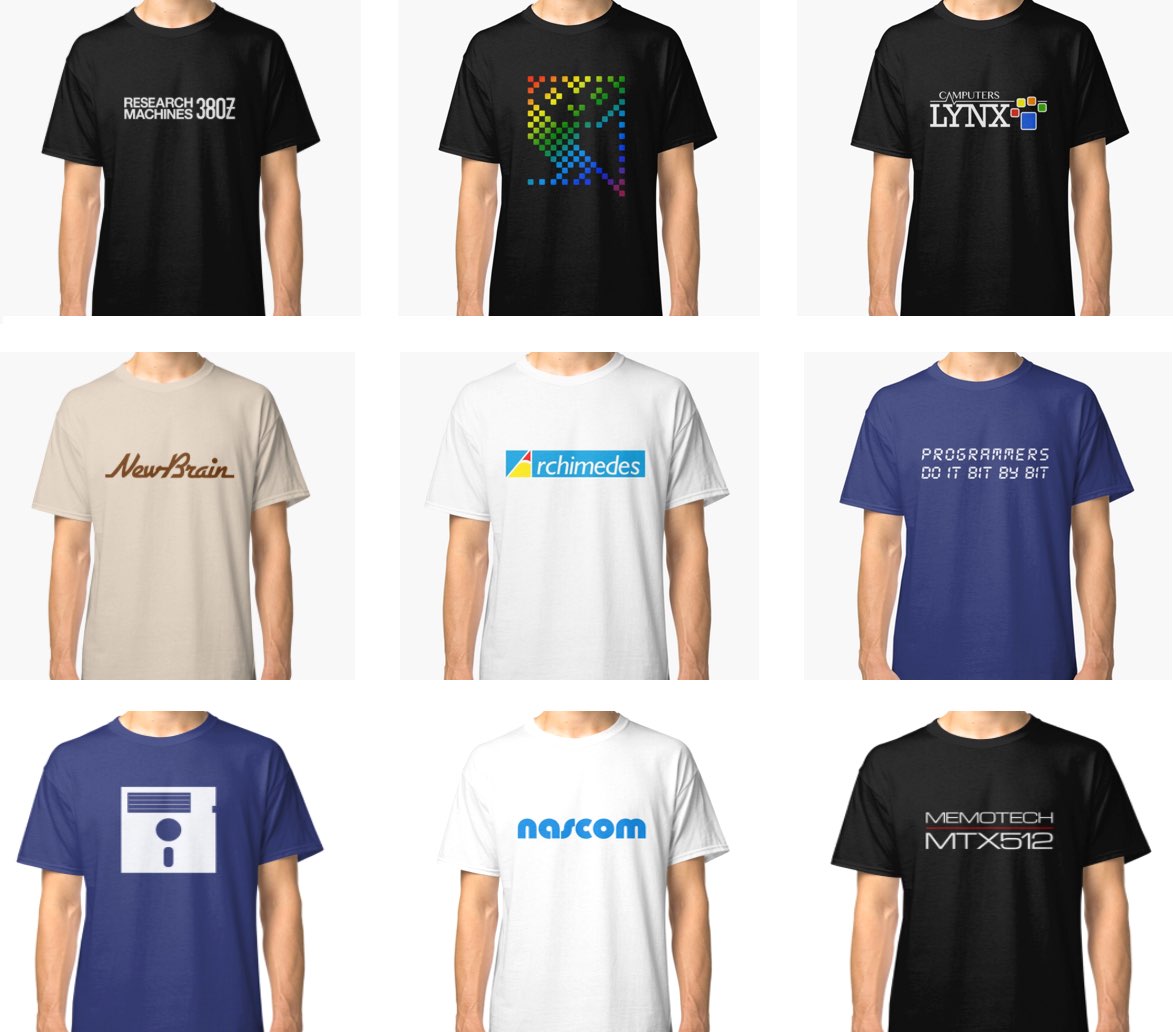
Announcing the results of a small side-project I’ve been working on for a couple of months: my retro tech T-shirt shop is now open.
If you have an interest in the early years of microcomputing, head over to my Red Bubble store and check out the available apparel. Here’s a small selection:
Check out my retro tech T-shirt store
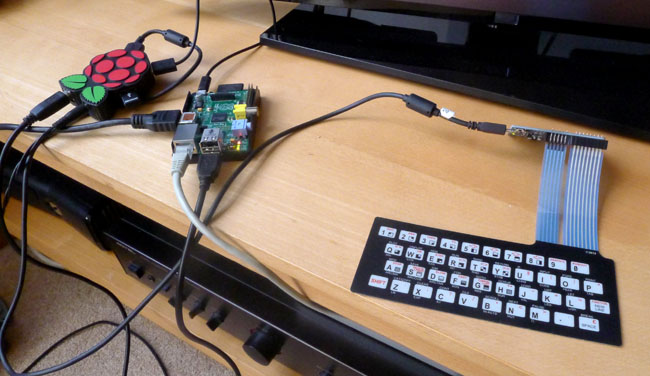
Previously on ‘ZX81: a Raspberry Pi retro restyle’: I used a headerless Arduino Leonardo to connect a ZX81 microcomputer keyboard to a Raspberry Pi via USB, using code to handle normal, shifted and function-shifted key presses.
After some searching on eBay, I found an old ZX81 going cheap because it lacked cables, though when it arrived, I found the computer itself to be in excellent condition. Possibly it has never been used, though how if that were the case the cables were lost and the box got so tatty is a mystery I will probably never solve.
Continue readingCheck out my retro tech T-shirt store
I love the design of the Sinclair ZX81. It was never a great computer, even in 1981. It only had 1KB of on-board RAM, it was slow, it was small, it could only do black and white graphics, and it’s membrane keyboard was useless for fast typing. But it looked fantastic: black, sleek and totally futuristic. Almost all other 1980s microcomputers now look very dated. No surprise there, of course, but the ZX81 still looks amazing.
In November 2012, I wrote and published the definitive history of the Thorn EMI Liberator, the first British laptop computer, over at The Register. I’d never even heard of the machine when I first saw a picture of it. I spotted the snap while researching the story of the Dragon 32 – some of the Dragon engineers went on to develop the Liberator after Dragon Data, by then a subsidiary of electrical industry giant GEC, was closed down.