
One of the difficulties of using retro tech these days is power. Back in the (pre-USB) day, every device had its own, specific power requirements: voltage, wattage and polarity of barrel connector. And big, chunky ‘wall warts’ to go with them. I’m using three old portable devices at the moment, and they all have different AC adaptors.
Worse, before all the clever stuff we can do with rare-earth minerals, which is why modern AC adaptors are all so compact, power supplies could easily fail. Not an issue back then-you just ordered a replacement from the manufacturer. Now they’re no longer made, they’re very hard to replace.
And it’s not just the wound-coil transformers inside that cause bother. My biggest worry is breaking the lead at the point where it enters the main unit. This is where these things always used to become unusable as cable movement and knocks cause the wiring to split.
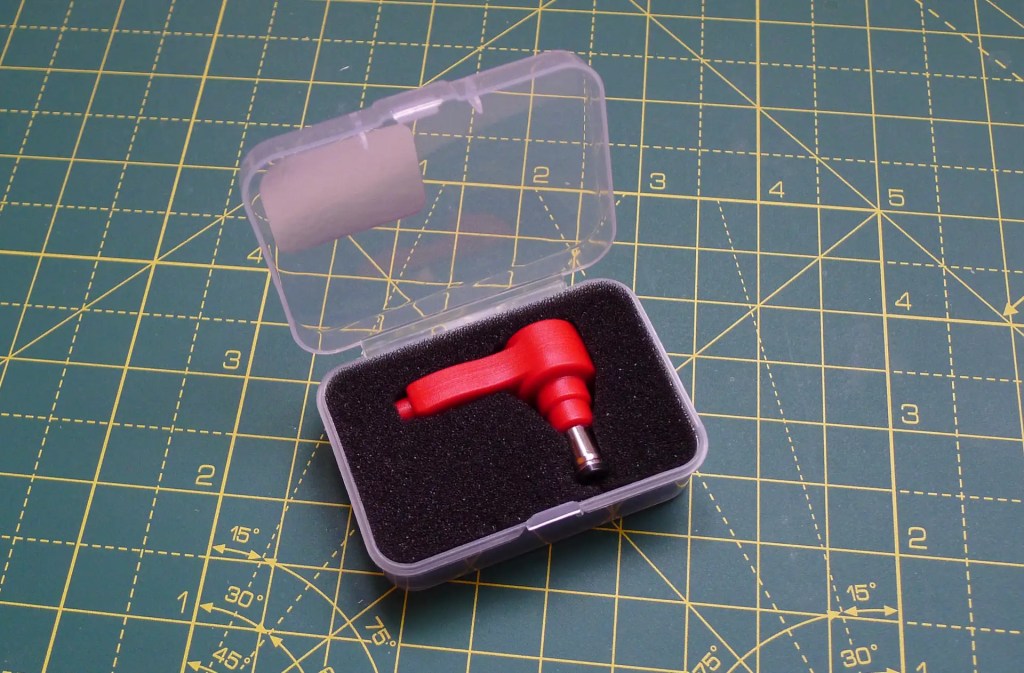
So for reasons of convenience (many devices, but just one small AC adaptor) and fear of damaging my vintage power supplies, I wanted a simple, USB-based alternative to old PSUs. Here it is: the MyVolt Step-Up.
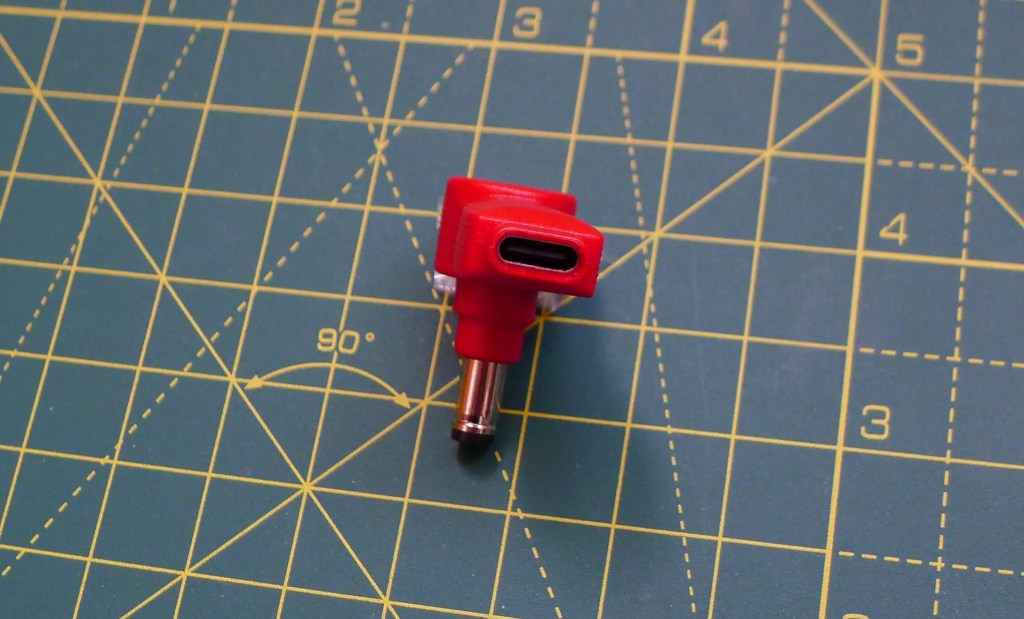
It’s a small, L-shaped unit that has a USB-C connector at one end and a 2.1/2.5mm barrel jack on the other. Inside is a voltage convertor. They come in a range of output voltages and you can choose whether you want the barrel jack’s inner terminal to be positive or negative.
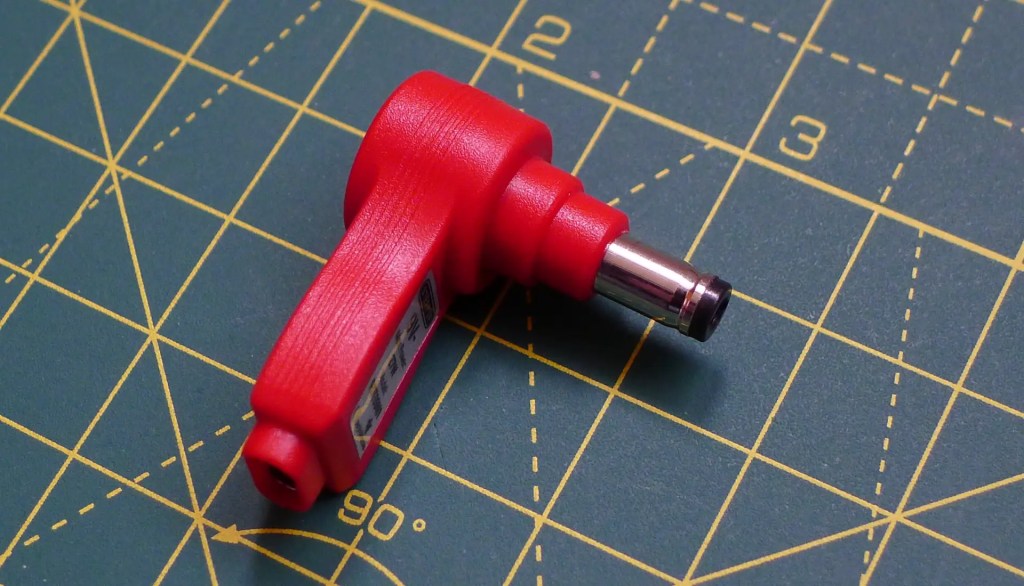
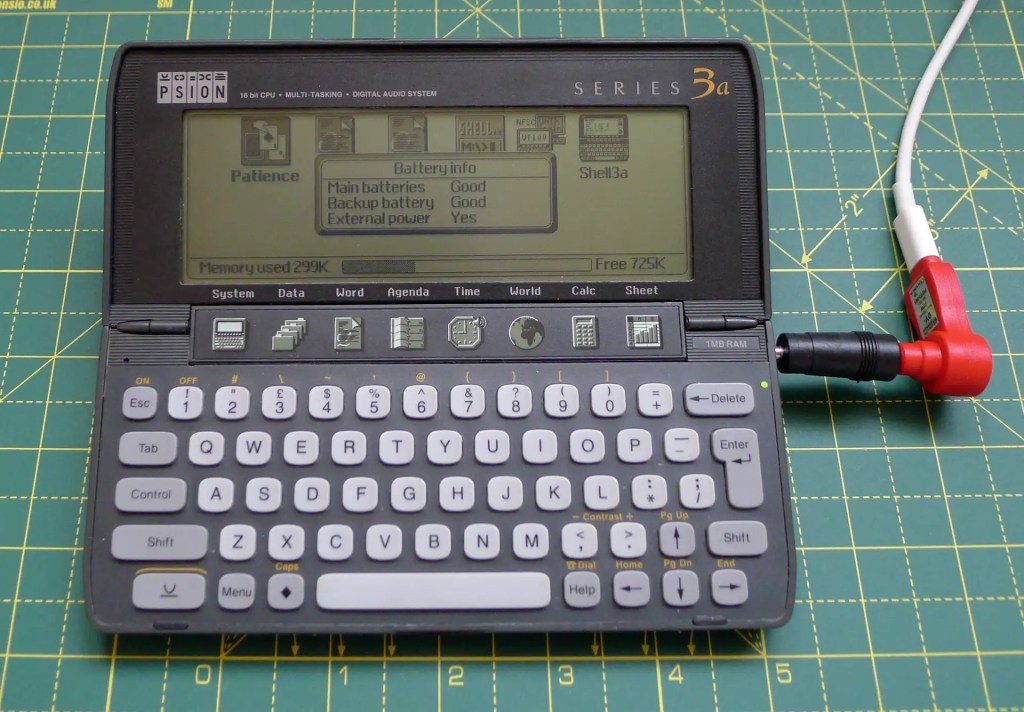
So, as a case in point, consider my Psion Series 3a. It requires 9V and has a negative central pin. It takes a 1.3mm jack. So I picked up MyVolt’s Step-Up 9V- and, from eBay, an inexpensive 2.1mm-to-1.3mm barrel adaptor, and put them together.
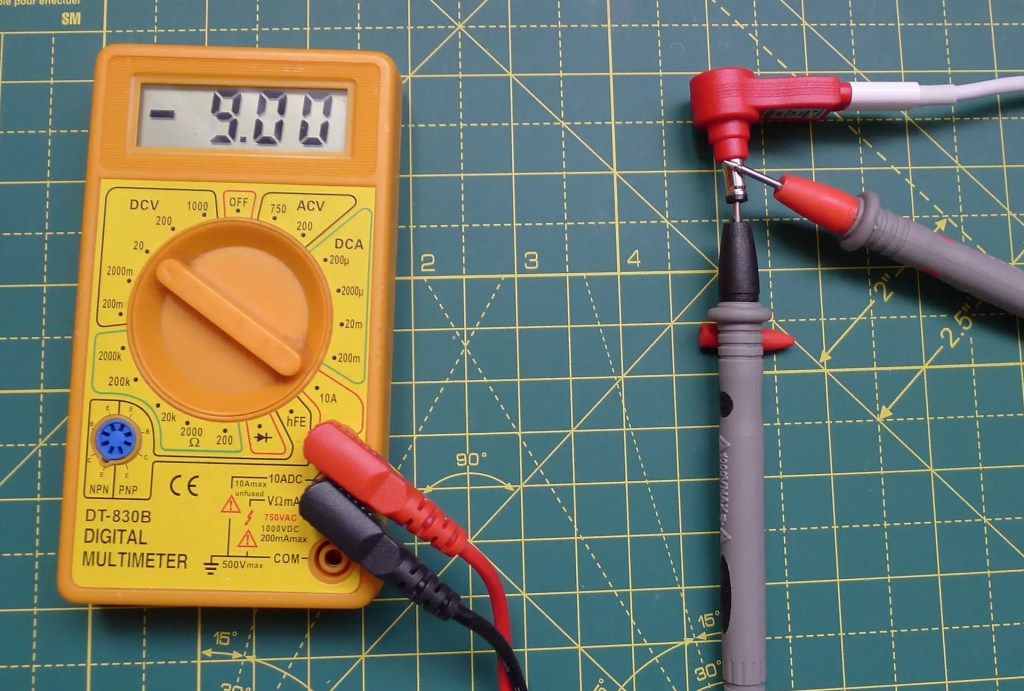
Well, not straight away. First, I checked it with a volt meter. So one point to note: the output voltage oscillates around 8.9V, so the Step-Up doesn’t deliver a smooth 9V. To be fair, it’s intended for use with guitars and other music studio kit, not ancient handhelds, so perhaps that’s not considered an issue by the target market. In any case, it’s close enough, so I connected it to my Psion.
And it works. This means I can take it with me when I’m out and about and as long as I have a small USB PSU, I’m good to go. No more lugging a brick around.
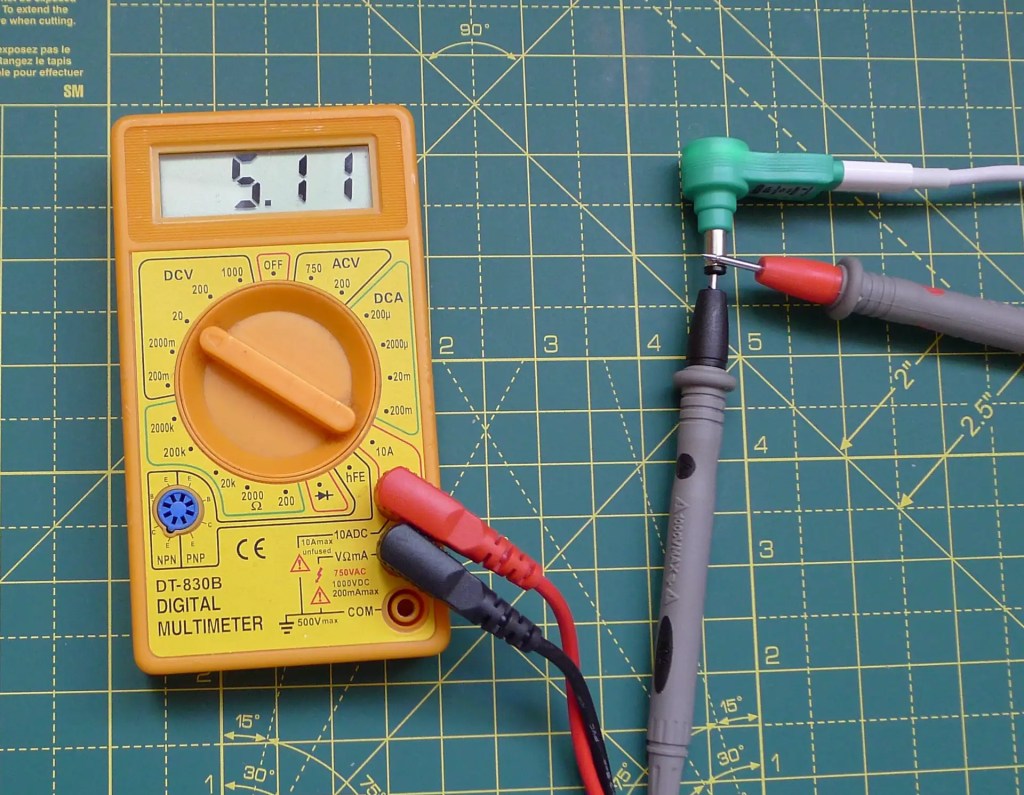
My Psion Series 5MX requires only 6V (inner positive this time). The Step-Up 6V+ should be ready for it. In fact, my measurements show it coming it a bit under 6V (just over 5V usually) and therefore not really enough. The 5MX’s Epoc32 OS often said there was no external power connected even when there was, and the external power indicator LED was lit. Switching AC adaptors, Apple 70W to Raspberry Pi 27W, seemed to solve this, so you may need to pick your PSU carefully, though the reading was still only a smidgeon above 5V.
One other, minor irritation: the insulator layer on the Step-Up barrel jack is not colour coded for easy recognition. Both of mine are black, but both have different polarities. Thankfully the 6V+ unit is green and the 9V- red, so I can tell them apart at a glance. When I get another 6V, negative this time, for my NC100, it’s brown, so I’ll still be able to grab the right one.
My Psions have on-board LED indicators to show when an active external power supply is present, but the Step-Ups also have an LED on board that lights up very brightly as soon as they’re powered.
Each Step-Up will set you back £15.98, but if you get more than one, postage is free. Bear in mind the Step-Up contains USB-C power negotiation chippery, so it’s not simply a passive adaptor. For me, that’s therefore a price worth paying, especially as it saves me from connecting up crude hand-wired polarity inversion (the main reason I have one of these for each of my devices).
Verdict
Not unreasonably priced USB-C power adaptor for your retro devices that does the job, supports a range of voltages and polarities, and minimises the need for homemade lash-ups. What’s not to like?
I bought my Step-Ups direct from MyVolts.


I noticed a small detail in your photos that might be worth pointing out: The multimeter probes appear to be connected to the wrong sockets.
When measuring voltage, the black probe should be connected to the COM socket and the red probe to the VΩmA socket.
Interestingly, the displayed reading can still be correct, since the 10A input is typically connected to COM through a low-resistance path. However, using the 10A socket for voltage measurements is not recommended and could potentially lead to unsafe situations.
Just a friendly observation. I thought it might be useful to mention, especially for readers who might use the photo as a reference.
Thanks for sharing your work!
Thomas
You are absolutely correct, Thomas—and well spotted. I have remeasured the output voltage from 9-, 6- and 6+ Step-Ups and the readings are the same. But the moral of story remains: always check your connections before making a reading.