Phantom Slayer, the 1982 computer game I’ve restored on the Raspberry Pi Pico, has been updated to version 1.0.1 to give the titular spectres some extra smarts as they navigate the game maze in pursuit of the player.

Phantom Slayer, the 1982 computer game I’ve restored on the Raspberry Pi Pico, has been updated to version 1.0.1 to give the titular spectres some extra smarts as they navigate the game maze in pursuit of the player.

In the mid-1980s, I loved Phantom Slayer. Written for the Tandy Color Computer and made available for the Dragon 32, Phantom Slayer was a 3D maze shooter. Think a very basic version of Doom with colours but no textures. It wasn’t sophisticated, but it was quick and, more to the point, incredibly atmospheric.
Continue readingIf the Raspberry Pi is the BBC Micro de nos jours then the Pi Pico is perhaps the spiritual successor to that earlier Acorn micro: the Atom. So in homage to that ground-breaking pre-Beeb cased computer, here’s the latest offering from Smittytone’s Retro T-Shirt Store.

A new version of Fontismo, my iOS app that lets you install a selection of fonts on your iPhone or iPad, is now available.

Here’s something a little different: a basic C project that you can follow to build a fun handheld game with a Raspberry Pi Pico. Your mission: to enter a dark cave, and then locate and destroy the monstrous Wumpus.
Continue readingA couple of macOS releases or so ago, Apple introduced app extensions: self-contained modules that are bundled within apps to deliver functionality to the wider operating system. But how do apps and their extensions share information between themselves, in particular users’ preferences?
Continue readingLet the great Homebrew migration begin. Yes, Homebrew now has native support for Apple’s ARM64-based M1 chip. The latest version, 3.0.0, released 5 February, will run nicely on your Apple Silicon Mac. There’s a catch, of course. Well, several catches: first, not all of the tools you can install using Homebrew are M1 native yet and, second, Homebrew doesn’t offer explicit migration instructions, that I could find at least.
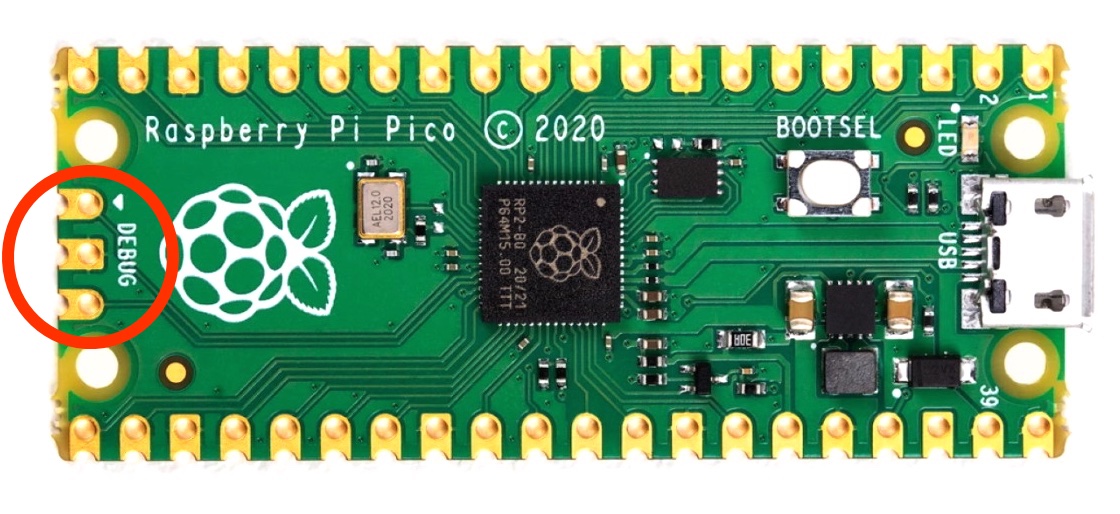
Continue readingWhen you’ve used Serial Wire Debug (SWD) to help you correct the C or C++ code running on your Raspberry Pi Pico, you’ll never want to go back to USB and the UF2 file system again. I don’t — no more messing about unplugging and re-plugging cables for me.
Continue readingLast week I tried the Raspberry Pi Pico with MicroPython. The Raspberry Pi Foundation would be sufficiently commended for providing only this level of programming support. MicroPython leverages the Python skills of the many Raspberry Pi users out there and is accessible to plenty of others too. But the Foundation has also provided a C/C++ SDK, and this opens the Pico up to serious embedded-system developers too.
Continue readingOn Thursday morning I awoke to the news that the Raspberry Pi people have entered the microcontroller board market with a new product, the Raspberry Pi Pico. Before I’d even got out of bed, I ordered a couple. Well, at £3.60 a pop, why not? I’ve now had a chance for a quick play, and here are my findings.
Continue reading