Tag Archives: psion

Retro LCD screen illumination: no backlight? Try a frontlight

I have written before about the Psion 5mx, a palmtop computer from the late 1990s, and I have grumbled about its LCD screen. I don’t have a problem with LCD per se — you can’t expect the same screen quality that you get with a modern colour OLED retina display — but in the right light conditions an LCD can be perfectly usable. However, the 5mx screen’s specific level of reflectivity narrows the range of lighting conditions under which it gives you a good, clear view.
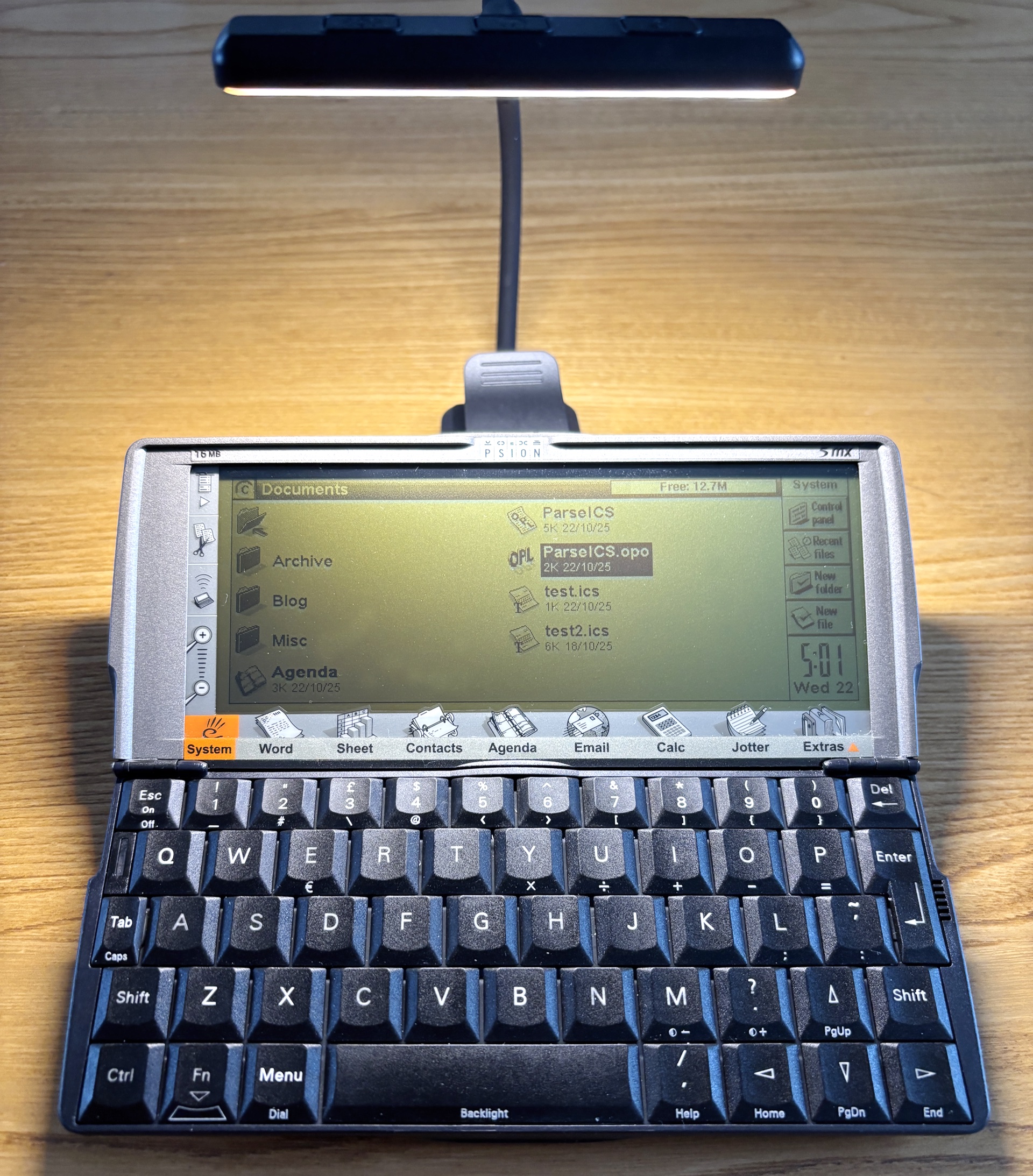
Illuminating your retro tech. Image © 2025, Tony Smith (@smittytone). All rights reserved

What’s odd about this is that the 5mx’s predecessor but one, the 3a, has a really good LCD screen which provides a clear view over a wider range of lighting conditions.

Continue reading

Psion of the times: using a 90s palmtop in the 21st Century

OK, so it was one of those purchases you can’t help yourself from making. A random, unprompted visit to eBay and suddenly I was £170 down but up one Psion Series 5mx palmtop with all the trimmings. And in very good condition it all is too.

Psion Series 5mx. Image copyright 2025 Tony Smith (@smittytone) All rights reserved

The Series 5 debuted in 1998 as the follow-up to the Series 3 family. I already have a 3a, the same model that I used for time a time back in the day. The 5 was a major upgrade: an ARM processor in place of an x86, more RAM of course, but crucially a backlit, touch-sensitive screen (plus device-dockable stylus) and a deck of larger, less calculator-like keys. In addition, out went the Series 3’s proprietary memory card format and in came a CompactFlash slot (though only one, not two as before). Psion also adopted a new serial comms port that negated the need for the Series 3’s 3Link ‘soap on a rope’ cable, which converted the 3’s proprietary bus to RS232.

Continue reading

Ancient Palmtops as serial terminals, Part 2: the Psion 5mx and the homelab

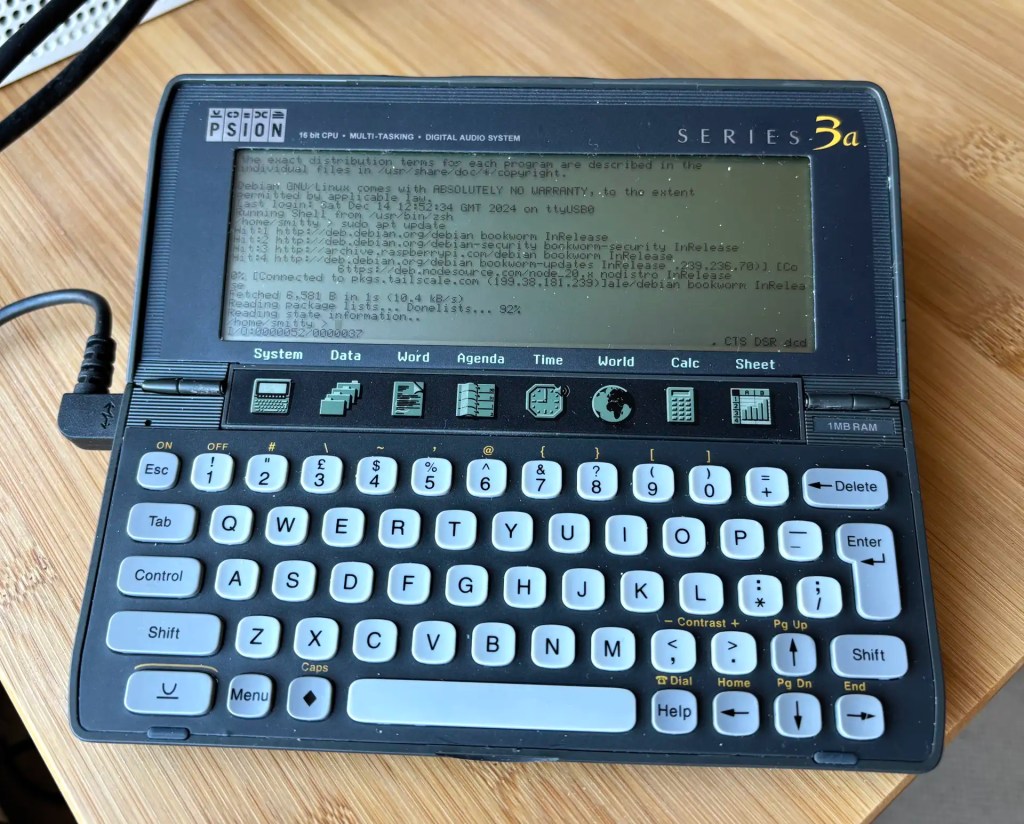
Last year, I performed some jiggery-pokery on my headless Raspberry Pi-based HomeLab to allow my veteran Psion 3a palmtop to be used as a serial terminal for those times when SSH-ing in was not an option. The age of the 3a meant it was a sub-optimal experience, but it was usable. I recently acquired a Psion 5mx, released half a decade after the 3, and put it to the same task.

A Psion 5mx running Hermes to show a Raspberry Pi serial terminal. Image © Tony Smith (@smittytone)

The experience is much better, but I needed to tweak the PI-side settings to get results.

Continue reading

Old tech for typing: using 1992’s Amstrad NC100 Notepad in 2025

In the early 1990s, I got to play with a new Amstrad device: the NC100 “notepad computer”. At the time, Amstrad was the name in British computer manufacturing. Notably it had shifted more than a million of its PCW series of word processors and while at this point it was pushing its line of IBM-compatible PCs, it hadn’t forgotten the success it had had with word processing kit.

The Amstrad NC100 (Image © 2025, Tony Smith)
Amstrad’s NC100: portable productivity

Enter the NC100, a mobile machine sporting a full size keyboard and a 480×60-pixel LCD used to render 80×8 characters. Pitched as a personal productivity tool, it shipped with on-board diary, calculator, address book, world time and spreadsheet applications as well as word processing software. Heck, it even included BBC Basic, in case you wanted to write your own programs on your daily commute.

Continue reading

How to get a 1990s palmtop communicating 2024-style: connect a Psion 3a to the Interweb

Recap I have acquired a UK-made Psion Series 3a palmtop. I’ve connected it to my Mac. I’ve connected it to my headless Pi server over serial. My next goal: connect the 3a to the Internet.

I never had any great expectations for getting the 3a online. To summarise the problem: the 3a shipped without integrated Internet support. And while it later received it, via the PsiMail email package, Internet access was predicated on a dial-up connection using a modem and an analogue phone line. It is possible to bridge this ancient approach to the modern world of always on broadband and WiFi, but yes, it’s a bit of PIA. Anyway, this is what you do.

Continue reading

How to access and control a Raspberry Pi with a Psion Series 3a

Recap I have acquired a UK-made Psion Series 3a palmtop. I’ve connected it to my Mac. My next goal is to connect the 3a to the Internet for email. But first… yes, I got distracted: having connected the 3a to a Mac, what about a Raspberry Pi? Could I do more with it than transfer files?

Darn right, I can. I can use it to control my headless server.

Continue reading

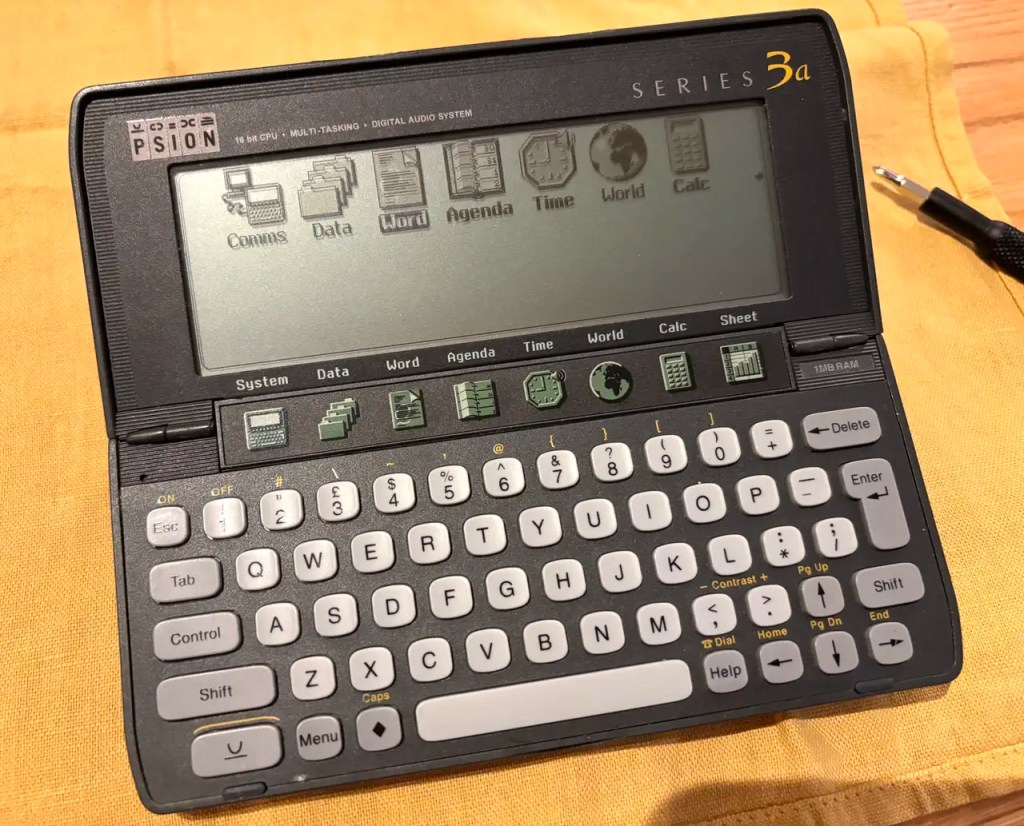
Palmy like it’s 1999: how to revive a Psion Series 3a handheld

I have a soft spot for the technology of my younger days. In the mid-1990s, for example, I was in my late twenties and one of the machines I used for a time — all my MacWorld Boston 1994 coverage was written on one — was the Psion Series 3a. Pitched as a portable personal organiser, it was a palmtop PC running a 16-bit OS, SIBO aka EPOC 16, on an x86 CPU.

Palm computing: the Psion Series 3a

Running, I might add off a couple of AA batteries (with a coin cell to maintain RAM disk contents when the main pair were replaced) that could last for at least a month. No backlight on the monochrome LCD, though, which makes the device’s use in dim lighting tricky. Strong, over-the-shoulder lighting is essential.

Continue reading