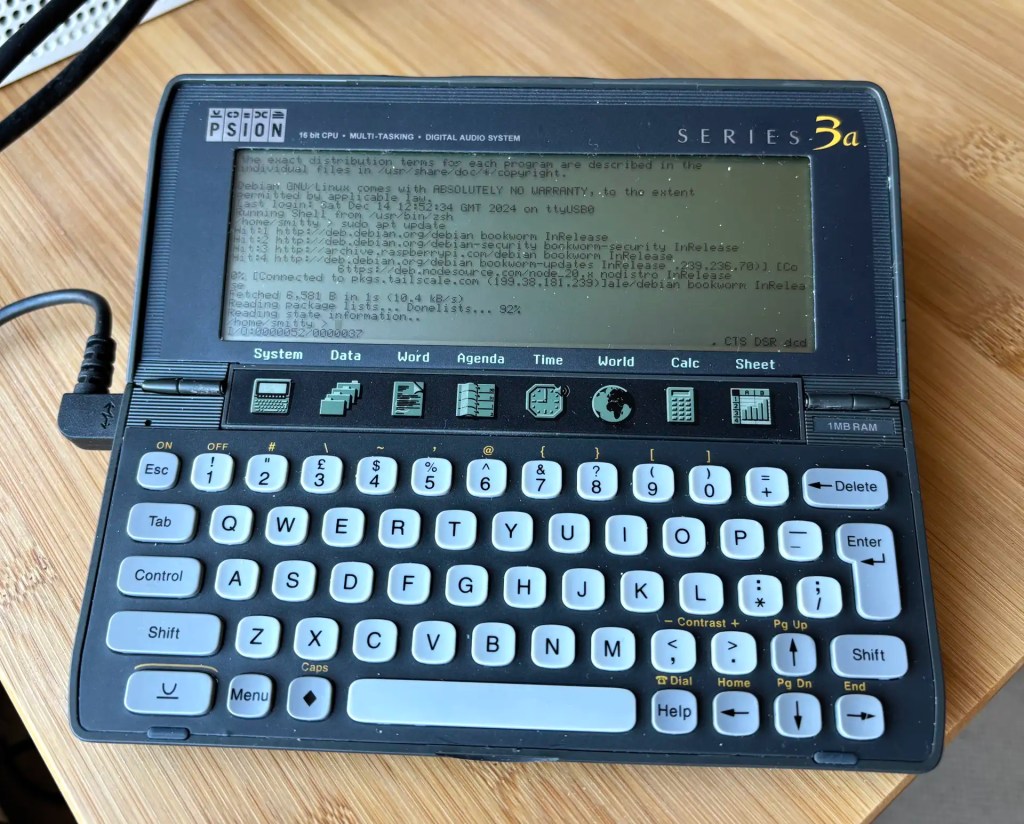
Recap I have acquired a UK-made Psion Series 3a palmtop. I’ve connected it to my Mac. My next goal is to connect the 3a to the Internet for email. But first… yes, I got distracted: having connected the 3a to a Mac, what about a Raspberry Pi? Could I do more with it than transfer files?
Darn right, I can. I can use it to control my headless server.
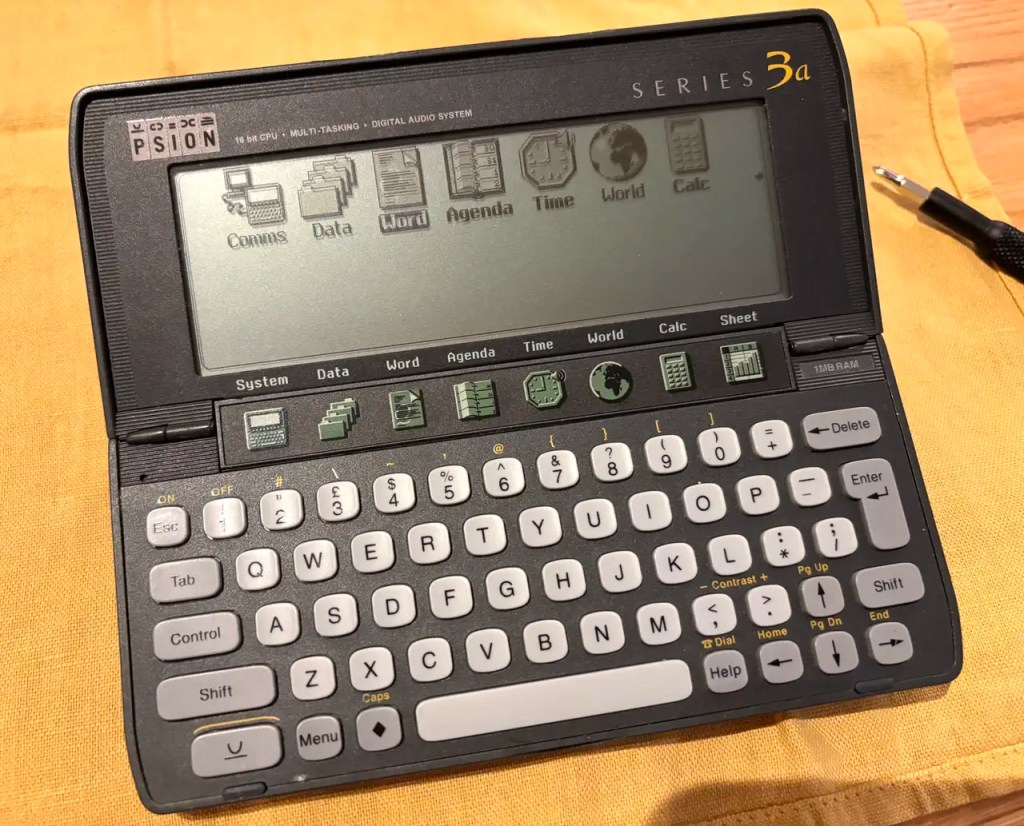
I have a soft spot for the technology of my younger days. In the mid-1990s, for example, I was in my late twenties and one of the machines I used for a time — all my MacWorld Boston 1994 coverage was written on one — was the Psion Series 3a. Pitched as a portable personal organiser, it was a palmtop PC running a 16-bit OS, SIBO aka EPOC 16, on an x86 CPU.
Palm computing: the Psion Series 3a
Running, I might add off a couple of AA batteries (with a coin cell to maintain RAM disk contents when the main pair were replaced) that could last for at least a month. No backlight on the monochrome LCD, though, which makes the device’s use in dim lighting tricky. Strong, over-the-shoulder lighting is essential.
Nearly half a century ago, Clive Sinclair’s Sinclair Research made history. It released the ZX81, one of the key home computers of the 1980s, as the first low-cost micro available to High Street shoppers. And you can express your love of early 80s tech with my latest retro-wear: the ZX81 keyboard shirt.
In the mid-1980s, I loved Phantom Slayer. Written for the Tandy Color Computer and made available for the Dragon 32, Phantom Slayer was a 3D maze shooter. Think a very basic version of Doom with colours but no textures. It wasn’t sophisticated, but it was quick and, more to the point, incredibly atmospheric.
Do you have what it takes to face down the Phantoms?
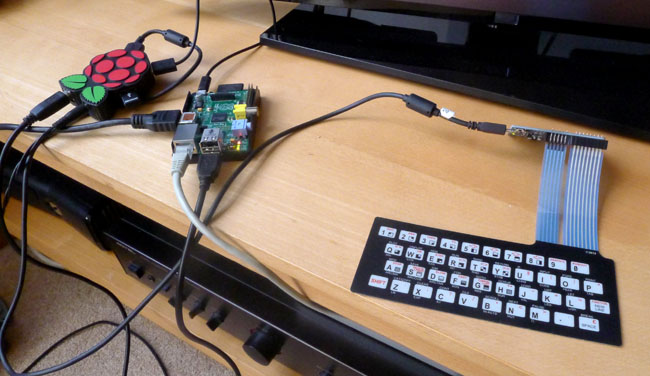
Previously on ‘ZX81: a Raspberry Pi retro restyle’: I used a headerless Arduino Leonardo to connect a ZX81 microcomputer keyboard to a Raspberry Pi via USB, using code to handle normal, shifted and function-shifted key presses.
After some searching on eBay, I found an old ZX81 going cheap because it lacked cables, though when it arrived, I found the computer itself to be in excellent condition. Possibly it has never been used, though how if that were the case the cables were lost and the box got so tatty is a mystery I will probably never solve.
I love the design of the Sinclair ZX81. It was never a great computer, even in 1981. It only had 1KB of on-board RAM, it was slow, it was small, it could only do black and white graphics, and it’s membrane keyboard was useless for fast typing. But it looked fantastic: black, sleek and totally futuristic. Almost all other 1980s microcomputers now look very dated. No surprise there, of course, but the ZX81 still looks amazing.
The ZX81 keyboard hooked up to the Pi via USB and Arduino
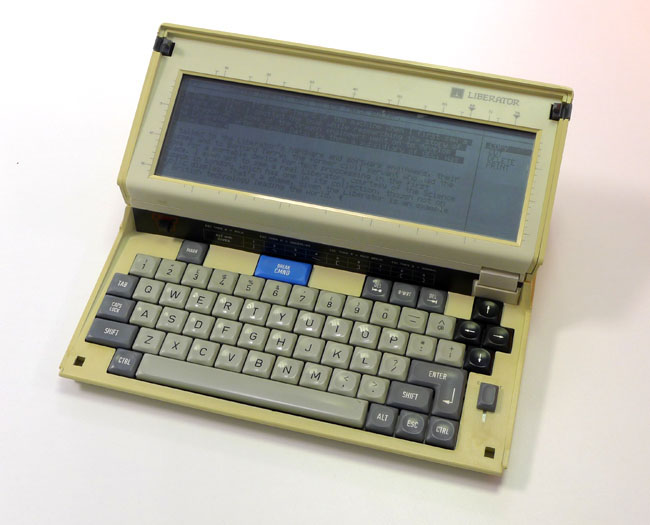
In November 2012, I wrote and published the definitive history of the Thorn EMI Liberator, the first British laptop computer, over at The Register. I’d never even heard of the machine when I first saw a picture of it. I spotted the snap while researching the story of the Dragon 32 – some of the Dragon engineers went on to develop the Liberator after Dragon Data, by then a subsidiary of electrical industry giant GEC, was closed down.
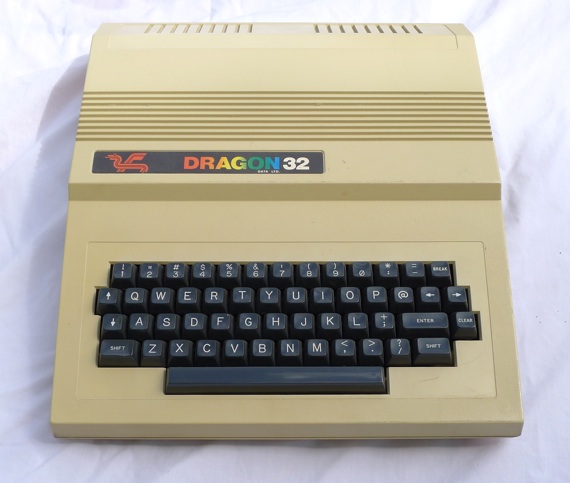
My Dragon 32 – bought from Boots, Central Milton Keynes by my father for my Christmas 1982 present – passed away this weekend during routine maintenance. It was 31.



 smittytone messes with micros