
OK, I had to buy mine first, so I’m only getting to play with the new Raspberry Pi 500 desktop after numerous folk have gone to town over its lack of interior SSD connectivity. My Pi 5 has an SSD, but it’s a server. My desktop Pi was until now a Pi 400 (it saves a lot of desktop space). I use a 64GB Samsung Fit USB 3.1 for storage and it suits me very well. Using literally the same drive — literally move it from one machine to the other — the 500 is a clear improvement on its predecessor.
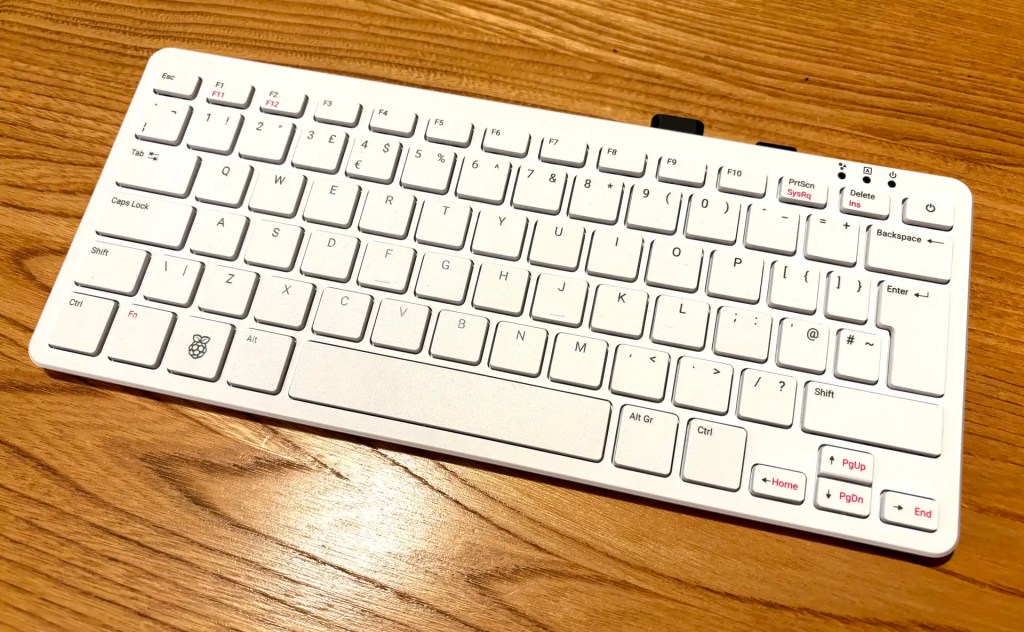
Naturally you expect the 500 to be faster because it’s in the specs. But often such product changes don’t make themselves felt in real-world work. Not so here. The 500 feels much niftier from the off — even when using the Micro SD card Raspberry Pi has just taken to bundling with its keyboard computers.
No, the 500 is very much swifter than the 400 and finally feels like a computer you can do your daily computing chores on rather than one you reserve for ‘play’ projects. It can do that too: like the 400 it has a full GPIO array on the back, part of a new layout that’s neither better nor worse than the 400’s.
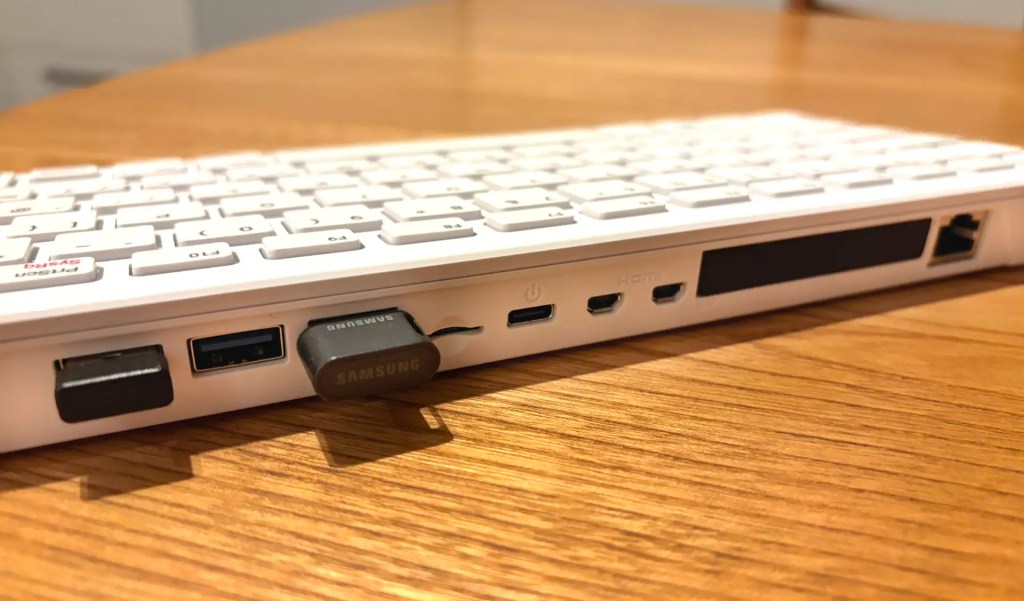
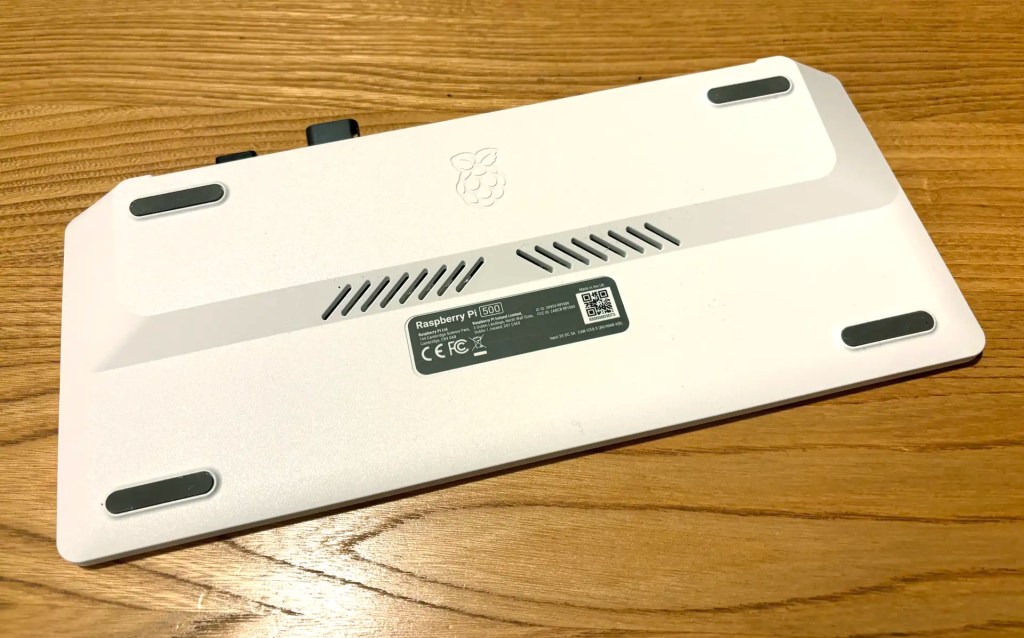
Of course the 500 has four more gigabytes of RAM than the 400, not just a faster CPU. Like the 400, it’s passively cooled, but didn’t get too hot for me.
The other immediate improvement you notice is the keyboard. It’s much less clacky than the 400 (and the Raspberry Pi keyboard accessory) and more like what you’d find on a laptop. Not a top-of-the-line laptop, perhaps, but one that’s nice to use nonetheless. But it still requires a pretty firm press to register a keystroke.
I’m not sold on the loss of the white’n’berry two-tone colour scheme of the older model — the 500 is pure white — but it’s no deal-breaker.
And while some may baulk at the higher price: given you’re getting an extra 4GB of RAM, a 32GB Micro SD card, a better keyboard and a faster CPU, it’s not exactly a cheeky increase. I think getting this performance for well under a hundred quid (£85) is really quite decent.
Don’t forget there‘s the Desktop Kit version that bundles a heap more stuff, including the essential AC adaptor, a mouse, aMicro HDMI cables and what used to be called a User Manual, and that. Raspberry Pi should be really getting this boy out into mass-market retail not just the specialist stockists.
And release a version with SSD support.
 smittytone messes with micros